Showing posts with label podcast. Show all posts

Thursday, June 8, 2023

New Podcast: Vanessa Vo & the Vietnamese Instruments of Bound

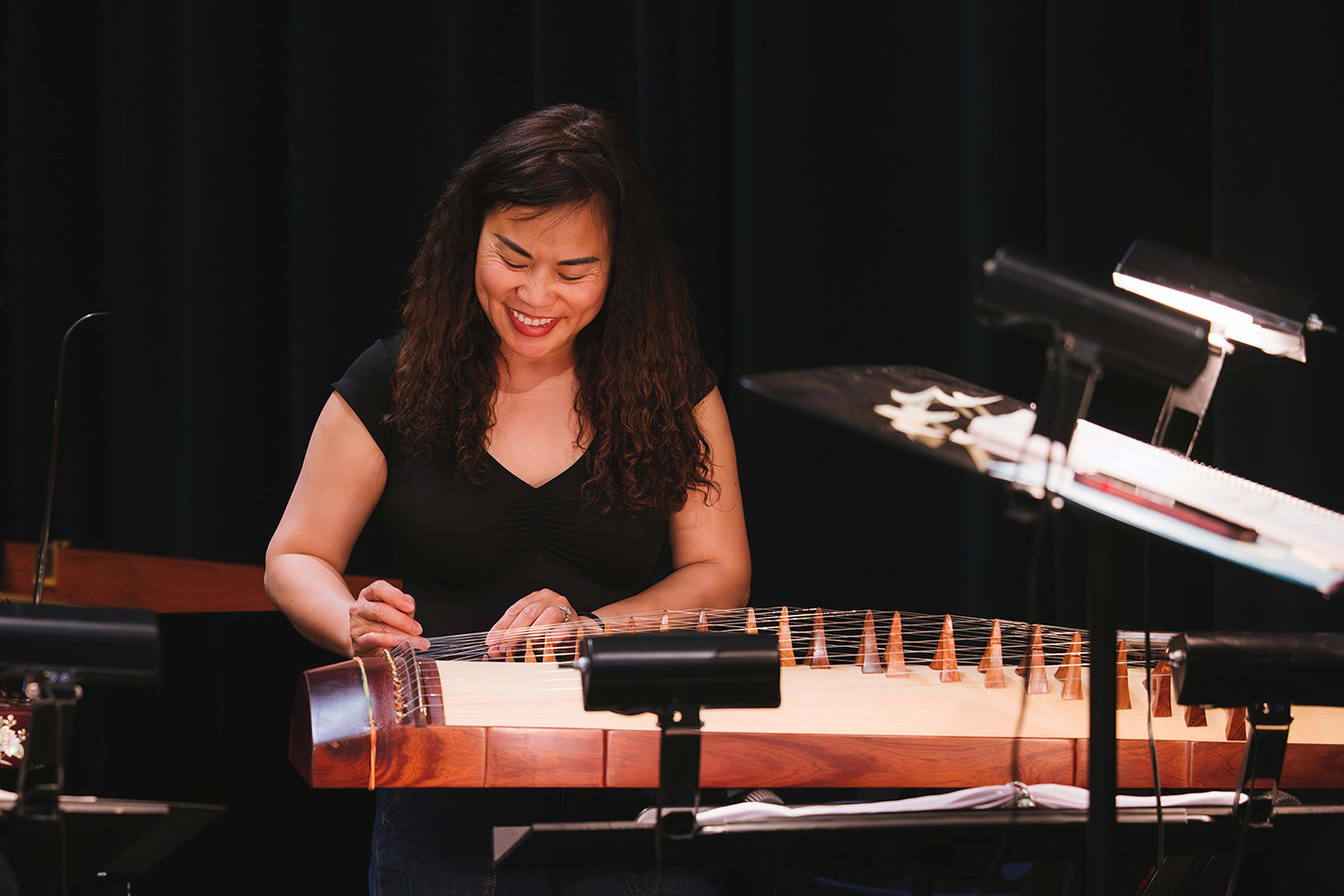
© Sunny Martini

In June, Seattle Opera presents Bound, a one-act chamber opera (music by Huang Ruo, libretto by Bao-Long Chu). This opera features Vanessa Vo playing đàn bầu (monochord) and đàn tranh (Vietnamese zither). In this podcast, Vo demonstrates and discusses these instruments with Dramaturg Jonathan Dean.

Monday, May 15, 2023

Looking at La traviata through a sex-positive lens

Briq House, Moonyeka and Gabrielle Nomura Gainor discuss Verdi’s famous heroine and new narratives for sex work, pleasure, and liberation in 2023.

Moonyeka, Gabrielle Nomura Gainor and Briq House.

The first year that La traviata played to audiences in 1853, Verdi was able to pull off a great feat. The Italian composer had manipulated a mid-nineteenth century European audience into sympathizing with Violetta—a woman who, despite being a member of high society, was a sex worker—a person who made a living through transactional relationships with wealthy men. La traviata means “the fallen woman,” or, more literally, "the woman who has been led astray."

Now, 170 years later—the oppressive structures governing women and femmes are still in play. What’s different are the new and more varied narratives surrounding sex workers, pleasure seekers, and women who strive to be “sempre libera” (always free) like Violetta.

Tuesday, November 22, 2022

New Podcast: A Buddhist Perspective on Tristan and Isolde

Mary Elizabeth Williams (Isolde) in Tristan and Isolde. © Sunny Martini

Seattle Opera subscriber Dr. Chris Rebholz, a practicing Buddhist, discusses Wagner’s Tristan with Seattle Opera Dramaturg Jonathan Dean. Fascinated by Buddhism when he wrote Tristan and Isolde, Wagner created an opera all about compassion, karma, desire, enlightenment, and the difficulty of reconciling both conventional and ultimate reality (aka “Day vs. Night”). Dr. Rebholz teaches adult classes on Buddhism at Seattle’s Sakya Monastery of Tibetan Buddhism. A clinical and forensic psychologist, in private practice, who specializes in evaluating neurodiverse adults for healthcare and the courts, she teaches corporate seminars on neurodiversity as well as continuing legal education on issues of mental health and the law.


Friday, November 4, 2022

New Podcast: MARY ELIZABETH WILLIAMS Discusses Isolde

American soprano Mary Elizabeth Williams, beloved in Seattle for performances such as Tosca, Abigaille in Nabucco, and Serena in Porgy and Bess, just made her role debut as Isolde, the first time she’s ever sung a Wagner opera. She discussed the character, the singing, and her two-and-a-half year journey towards this achievement with Seattle Opera Dramaturg Jonathan Dean. This podcast features clips of Williams singing Tosca (conducted by Julian Kovatchev) and “Pace, pace, mio Dio” from La forza del destino (conducted by Carlo Montanaro), as well as Amber Wagner singing Brangäne in Tristan und Isolde (conducted by Jordan de Souza).
Mary Elizabeth Williams rehearsing Tristan und Isolde with Stefan Vinke. © Sunny Martini

Monday, August 23, 2021

Loving Wagner, Hating Wagner...and the Middle Path

Listen now
—wherever you get your podcasts—to Seattle Opera's episode "Loving Wagner, Hating Wagner...and the Middle Path." 

Seattle Opera Scholar-in-Residence Naomi André and Dramaturg Jonathan Dean discuss the most controversial of all opera composers, Richard Wagner, whose Die Walküre the company will present, in concert (and abridged) at Fisher Pavilion on August 28. Wagner’s astonishing masterpieces continue to challenge and delight audiences, although his legacy is tainted because of his obnoxious attitudes and how his work was appropriated by the Third Reich. André and Dean discuss approaching Wagner, not from an ‘either/or’ mentality, but from a “both...and” way of thinking.

A few excerpts of their conversation below:

Wednesday, May 13, 2020

OPERAWISE: Operetta

In this series of podcasts, Seattle Opera Dramaturg Jonathan Dean gives listeners a taste of nine different types of traditional opera. Operetta is a delightful kind of entertainment resembling opera, but different; whereas in opera the music tells the story, in operetta the music decorates a story which is usually little more than a joke—a story that nobody could possibly take seriously. Operetta developed, in the late nineteenth century, just as opera began taking itself perhaps too seriously. Operettas from traditions in Paris (Orphée aux enfers), London (The Pirates of Penzance), Vienna (Die Fledermaus) and New York City (Rose-Marie) typify the genre. And although many operettas remained popular for decades, the golden era of creating operetta turned to silver, then iron and finally steel as the twentieth century turned its energy toward making movies and wars.

Musical examples on the podcast include:
  • •Can-Can from Orphée aux enfers, orchestra of l’Opéra National de Lyon conducted by Mark Minkowski (EMI 1997)
  • •Entrance of Public Opinion, from Orphée aux enfers, Ewa Podles and orchestra of l’Opéra National de Lyon conducted by Mark Minkowski (EMI 1997)
  • •Duet from Orphée aux enfers, Natalie Dessay, Laurent Naouri and orchestra of l’Opéra National de Lyon conducted by Mark Minkowski (EMI 1997)
  • •Galop Infernal from Orphée aux enfers soloists and orchestra of l’Opéra National de Lyon conducted by Mark Minkowski (EMI 1997)
  • •Pirate King’s Song from The Pirates of Penzance, James Milligan, Glyndebourne Festival Chorus, and Pro Arte Orchestra conducted by Sir Malcolm Sargent (EMI 1961)
  • •“A British Tar” from H.M.S. Pinafore , soloists, Glyndebourne Festival Chorus, and Pro Arte Orchestra conducted by Sir Malcolm Sargent (EMI 1961)
  • •Nightmare Song from Iolanthe, George Baker and Pro Arte Orchestra conducted by Sir Malcolm Sargent (EMI 1961)
  • •Merry Widow Waltz from Die lustige Witwe, Felicity Lott, Thomas Hampson, and London Philharmonic conducted by Franz Welser-Möst (EMI Classics)
  • •Waltz from Die Fledermaus; Vienna Philharmonic conducted by Herbert von Karajan (Decca 1960)
  • •“In Feuerstrom der Reben” from Die Fledermaus; Waldemar Kmentt, Vienna Philharmonic conducted by Herbert von Karajan (Decca 1960)
  • •Mounties’ Song from Rose-Marie, Nelson Eddy with chorus and orchestra conducted by Nathaniel Shilkret from “Oscar Hammerstein—the Legacy” (Pearl)
  • •Indian Love Call from Rose-Marie, Jeanette MacDonald and Nelson Eddy with orchestra conducted by Nathaniel Shilkret from “Oscar Hammerstein—the Legacy” (Pearl)
  • •“O, what a beautiful mornin’” from Oklahoma sung by Gordon MacRae (original 1955 film soundtrack album)
That's it for now, in terms of genres of traditional operas!

Wednesday, May 6, 2020

OPERAWISE: Singspiel

In this series of podcasts, Seattle Opera Dramaturg Jonathan Dean gives listeners a taste of nine different types of traditional opera. Singspiel (that’s German for SongPlay) mixes songs, dialogues, choruses, and marvelous orchestral writing with fun and fantasy for a lowbrow, family friendly art form—the ancestor of today’s Star Wars movies. Mozart’s ever-popular Magic Flute is the perfect introduction to Singspiel, as well as one of the most beloved operas ever written. Another wonderful Singspiel, Weber’s Der Freischütz, demonstrates the power of this form to send a wonderfully creepy chill down your spine.

Musical examples on the podcast include:
  • •Celebratory chorus from Hans Heiling, Slovak Philharmonic Orchestra and Chorus conducted by Ewald Körner (Marco Polo 1992)
  • •“Der Vogelfänger bin ich ja” from Die Zauberflöte; John Moore and Seattle Opera orchestra conducted by Julia Jones, 2017
  • •Hunters’ Chorus from Der Freischütz; Seattle Opera chorus and orchestra conducted by Gerard Schwarz, 1999
  • •Melodrama from Fidelio, Jane Eaglen and Kevin Langan, Seattle Opera orchestra conducted by Gerard Schwarz, 2003
  • •A line of Papageno’s from Die Zauberflöte, John Moore and Seattle Opera orchestra conducted by Julia Jones, 2017
  • •Act 1 Finale from Die Zauberflöte, Andrew Stenson and Seattle Opera orchestra conducted by Julia Jones, 2017
  • •Act 2 Finale from Die Zauberflöte , Seattle Opera orchestra conducted by Julia Jones, 2017
  • •“Der Hölle Rache” from Die Zauberflöte, Christina Poulitsi and Seattle Opera orchestra conducted by Julia Jones, 2017
  • •“O Isis” Chorus from Die Zauberflöte Seattle Opera chorus and orchestra conducted by Julia Jones, 2017
  • •Opening duet from Fidelio, Lucia Popp, Adolf Dallapozza, and Vienna Philharmonic conducted by Leonard Bernstein (Deutsche Gramophon, 1978)
  • •“O namenlose Freude” from Fidelio, Gundula Janowitz, René Kollo, and Vienna Philharmonic conducted by Leonard Bernstein (Deutsche Gramophon, 1978)
  • •Cat duet from Der Stein der Weisen, Jane Giering-De Haan, Kevin Deas, and Boston Baroque conducted by Martin Pearlman (Telarc, 1999)
  • •Wolf’s Glen Scene from Der Freischütz, Harry Peters, Gabor Andrasy, and the chorus and orchestra of Seattle Opera conducted by Gerard Schwarz, 1999
  • •Overture from Der fliegende Holländer, orchestra of Seattle Opera conducted by Sebastian Lang-Lessing, 2016
  • •Dance of the Apprentices from Die Meistersinger von Nürnberg , forces of the Bavarian State Opera conducted by Wolfgang Sawallisch (EMI Classics, 1993)
Stay tuned for one more podcast introducing another kind of opera next week!

Wednesday, April 29, 2020

OPERAWISE: OPÉRA COMIQUE


In this series of podcasts, Seattle Opera Dramaturg Jonathan Dean gives listeners a taste of nine different types of traditional opera. Opéra comique, a native French form of lower-brow musical theater, features spoken dialogue, catchy tunes with easy-to-sing refrains, and middle-class values. Many of the opéra-comiques still performed today (including Carmen, The Daughter of the Regiment, and Beatrice and Benedict, as well as opéra-comique derivatives such as Faust and The Tales of Hoffmann) deal, sentimentally or ironically, with a way of life and a value system which now belongs mostly to ancient history.

Wednesday, April 22, 2020

OPERAWISE: OPERA BUFFA

In this series of podcasts, Seattle Opera Dramaturg Jonathan Dean gives listeners a taste of nine different types of traditional opera. Opera buffa, the beloved old Italian tradition of opera comedy, is what you get by adding music to the even older Italian tradition of improvised (artisanal) comedy, commedia dell’arte. The fools and buffoons of commedia—the sassy wenches, befuddled old professors, suicidal young lovers, dirty old misers, hungry Harlequins, arrogant soldiers, zany servants, and all the rest—found new ways of entertaining us once they began singing gloriously. And with the opera orchestra functioning as a laugh track and adding jokes of its own, opera buffa continues to disarm us and charm us while putting a big grin on our faces. The Barber of Seville and The Elixir of Love are great examples of the genre.

Friday, April 10, 2020

PUSHKIN, the Wellspring of Russian Opera


In this pair of podcasts, Dramaturg Jonathan Dean discusses the great Russian writer Alexander Pushkin with Dacia Clay of the Classical Classroom Podcast. And here’s a list of (some) works by Pushkin (poems, plays, stories, novels, in the order he wrote them) that then inspired operas:

1820: Ruslan & Ludmila (Narrative Poem)
Made into Opera: Ruslan & Lyudmila (1842) by Mikhail Glinka

Wednesday, April 8, 2020

OPERAWISE: Music Drama


In this series of podcasts, Seattle Opera Dramaturg Jonathan Dean gives listeners a taste of nine different types of traditional opera. Music Drama was the personal solution to the problems of presenting opera in nineteenth-century Europe developed by composer/librettist Richard Wagner, opera’s ultimate mad genius. These long, loud, big works challenge artists, audiences, and the art form itself. Their complex music and unique spins on old stories continue to attract, repel, and provoke all who encounter them. Wagner’s Tristan und Isolde (1865) serves as an example of the genre, as does the Richard Strauss opera Elektra (1909).

Wednesday, March 25, 2020

OPERAWISE: Grand Opera


In this series of podcasts, Seattle Opera Dramaturg Jonathan Dean gives listeners a taste of nine different types of traditional opera. Grand opera developed in the mid-19th century and centered on performances at the Opéra in Paris. The roots of the genre stretch back to the opulent court of France’s Sun King, Louis XIV, and continue to influence how opera is presented to this day. Verdi’s Aida (1871) is probably the world’s favorite grand opera (although it’s not necessarily a textbook example of the genre, since it wasn’t written for the Opéra, is sung in Italian, and is briefer and more straightforward than most grand operas). Another beloved masterpiece is Wagner’s Tannhäuser (1845), a work retro-fitted in 1861 for performance at the Opéra.

Wednesday, March 18, 2020

OPERAWISE: Opera Seria


In this series of podcasts, Seattle Opera Dramaturg Jonathan Dean gives listeners a taste of nine different types of traditional opera. Opera seria, traditional Italian serious opera, developed in the mid-1600s and lasted into the early 1800s. Handel’s Giulio Cesare (Julius Caesar), an opera from 1724, is a great masterpiece and an examplar of the genre; another is Gluck’s Orfeo ed Euridice (aka Orphée et Eurydice, aka Orpheus and Euridice, 1762/1774).

Monday, March 16, 2020

Listen now to the La bohème podcast

Seattle Opera presents La bohème starring Angel Blue as Mimì. Philip Newton photo
With many people staying at home, now is the perfect time for a new podcast episode. Enjoy La bohème 101, a deep dive into opera’s quintessential love story with Seattle Opera dramaturg Jonathan Dean. Learn about Puccini’s music, the history of the opera, and more, all from the comfort of your home.

“It almost seems unnecessary to introduce this work. La bohème has been one of the world’s most beloved operas since 1896. Its music is both familiar and extremely easy on the ear. And the opera is virtually indestructible. The only time I’ve ever seen Bohème NOT work was before an audience consisting entirely of middle-school students, who really didn’t appreciate all its lovey-dovey, romantic stuff. They’ll figure it out someday.

Thursday, January 30, 2020

Listen now: On race, Beyoncé, and bringing new people to the opera house

Seattle Opera Director of Programs and Partnerships recently sat down with Seattle Opera Scholar in Residence, Naomi André for a podcast covering topics ranging from Beyoncé to opera in South Africa. Listen in to hear about Dr. André’s thoughts on how the opera industry can push beyond what we're currently doing to be more inclusive of our society today while also holding up and honoring these traditional works. She talks about loving opera from a young age and how she considers the artform after a career understanding more about its relationship to race and gender.

Monday, January 27, 2020

Listen now: Charlie Parker's Yardbird podcast

Left: The real jazz legend Charlie Parker, one of the most popular performing artists in music following World War II. Right: Joshua Stewart, one of the Charlie Parkers who stars in S

A new opera that combines jazz and classical music? Seattle Opera Dramaturg Jonathan Dean describes Charlie Parker’s Yardbird as a piece about "music, creativity, race and racism ... life, death, and freedom." In this opera, which had its premiere in 2015, a flexible operatic tenor uses his voice much like the real Parker used his alto-saxophone. Listen to the Seattle Opera podcast, hosted by Dean, to learn more about how the opera references the Black American art of jazz, and specifically, bepop.

"This opera explores the life of the one and only Charlie Parker, the saxophone player known as 'Yardbird,' and also, just 'Bird.' Now, it isn't a documentary or a biography. Opera is life distilled, concentrated, boiled down. Here, we have an artist's rendering of the essence of Charlie Parker's experience. This opera explores Parker's response to mid-century racism—he was the type of person who was forever pushing back on boundaries—and he pioneered bebop, a new kind of sound for the beat generation, before he died only 34-years-old from a combination of factors exacerbated by his addictions to heroin and alcohol. When he died, there was a long delay before the body was taken to the morgue and identified. That delay gave librettist Bridgette Wimberly the idea of setting this opera in a kind of purgatory just after Charlie's death, but before plans were made for his funeral. Charlie Parker finds himself in a limbo, where he considers the meaning of his life. Although he aspires to sum everything up in one valedictory composition, in the end, he realizes that his music, which was life and his soul, lives on. The bird flies free."—Seattle Opera Dramaturg Jonathan Dean

For more, tune in to the Seattle Opera podcast episode: Charlie Parker's Yardbird 101.

The Seattle Opera Podcast is for everyone. Are you an opera newbie (or maybe need a refresher)? Check out the SO’s opera 101 lessons. These short and entertaining overviews of the SO’s operas are a great place to start. Already an opera fan? Check out episodes that take a deeper dive into the operas. This podcast is a co-production of Seattle Opera and KING FM. Subscribe on iTunes. 


Charlie Parker's Yardbird plays Feb. 22–March 7, 2020 at McCaw Hall.

Charlie Parker’s Yardbird, Madison Opera, 2017 © James Gill

Monday, March 11, 2019

The voice of Seattle Opera's podcast: Jonathan Dean


Genevieve Hathaway photo
Meet the voice behind Seattle Opera's new podcast—the company's Dramaturg, Jonathan Dean! Dean, a charismatic, multilingual opera fanatic, wears a lot of hats around the office. (For example, he often creates the English supertitles you see projected over the stage for each performance). In fall 2018, he led the relaunch of Seattle Opera's new and exciting podcast. As the host, Jon Dean makes learning about opera fun and engaging, even if this historic art form isn't really "your thing." Episodes feature a variety of fun Opera 101 content, as well as behind-the-scenes interviews for each production. Listen to the podcast on iTunes, SoundCloud, or on seattleopera.org.

 By Philippa Kiraly
What is a dramaturg? The word comes from the Greek: drama + ourgos=work, and its meaning for Seattle Opera covers everything Jonathan Dean has worked on since his hiring in 1995, when he got his start in the Education department undertaking a variety of assignments, then was named director of Public Programs and Media in 2010 and in 2015, Dramaturg.

“It’s a central position in which I perform a lot of tasks which have accumulated over all these years,” he says, his latest energies being directed towards podcasts about upcoming opera productions, discussions about various voice types with illustrations, discussions with performing artists, and discussions about the inner meanings behind such ambiguous operas as Britten’s The Turn of the Screw.

Wednesday, August 1, 2018

Podcast: JOHN DEMAIN Introduces PORGY AND BESS

Maestro John DeMain made his Seattle Opera debut in 1987, conducting The Gershwins' (R) Porgy and Bess (R) the first time the complete opera was given in Seattle. Between his day job as Music Director of the Madison Symphony, in Wisconsin's capitol, and conducting engagements elsewhere, DeMain has returned to conduct in Seattle several times, including every Seattle Opera performance to date (including the upcoming ones!) of Porgy and Bess.
In this podcast, which includes musical illustrations from Seattle Opera's 2011 performances, DeMain discusses the work often called "the greatest American opera" with Seattle Opera Dramaturg Jonathan Dean and even tells the story of how America's opera companies retrieved Porgy and Bess, which had been simplified to make an easier-to-produce musical, starting with the bicentennial celebrations at Houston Grand Opera in 1976.

Friday, March 30, 2018

AIDAN LANG INTRODUCES AIDA

Listen to or read this downloadable podcast by General Director Aidan Lang introducing Seattle Opera's upcoming production of Aida. Lang debunks some of the myths attached to Verdi’s masterpiece, explores the complicated genesis and nationality of the opera, and explains how Verdi’s musical representation of patriotism evolved over the course of his lifelong experience of Italian unification. Aida plays at Seattle Opera for nine performances, May 5-19.

Hello, everyone, it’s Aidan Lang here, this time of course I’m talking about our next production, which is Verdi’s Aida.

It is an immensely popular piece. Why is that? I think the scale is number one. The fact that it is a grand opera, in many ways the grandest of grand operas, is very attractive. It’s not often we get to see operas of that scale. That’s a key to the popularity.

Monday, February 5, 2018

AIDAN LANG INTRODUCES BEATRICE & BENEDICT

Listen to or read this downloadable podcast by General Director Aidan Lang. To kick off Seattle Celebrates Shakespeare, we're proud to offer our first-ever opera by Hector Berlioz: Beatrice and Benedict, an operatic amplification of Much Ado About Nothing. Conducted by Seattle Symphony's Ludovic Morlot and directed by ACT Theatre's John Langs, this one-of-a-kind, all-new and all-Seattle production plays for only seven performances, February 24-March 10.

Hello, everyone, it's Aidan Lang here, and this time I'm here to talk about Berlioz's Beatrice and Benedict.

AN OPERA AND COMPOSER NEW TO US


We do like to give our audiences in every season one opera they've never seen before. This is the first time not only that Seattle Opera will be performing Beatrice, but also an opera by Berlioz.